


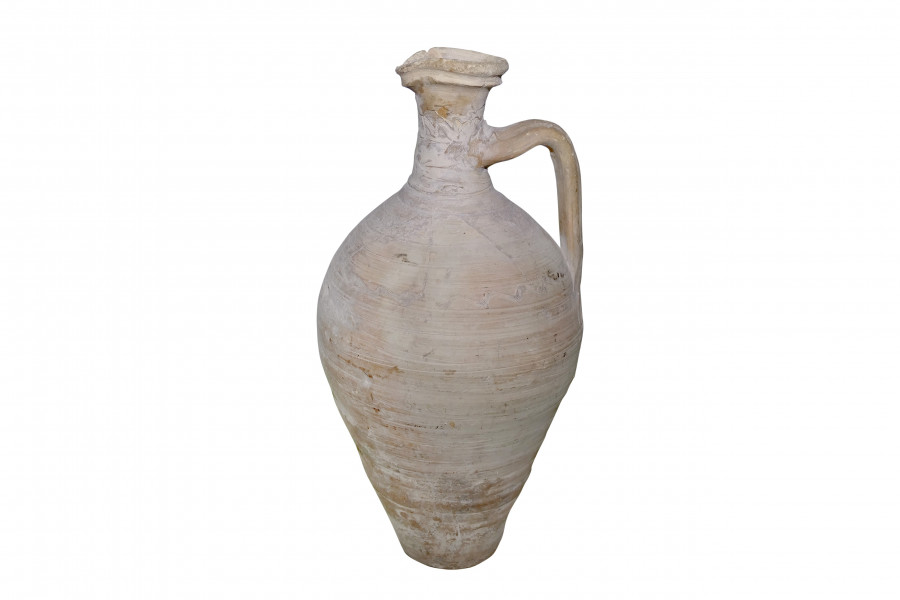
In ancient times, water jugs were widely used for storing water. A water jug was large and had a lid. A water jug was a special container designed to be placed on the ground. There were two types of water jugs: large and small. Large water jugs held 8-10 liters of water. These jugs were used to carry water from streams, ponds, wells, and boreholes. Small jugs were used to carry drinking water when traveling to distant places or to work. In the 14th and 15th centuries, ceramic production reached a high level in Central Asian countries. Ceramics were divided into two main groups: glazed and unglazed. Along with various types of green, blue, white, and blue glazed pottery, architectural structures during this period were decorated with colored glazed masonry, elevating them to a higher level. Masters of this art form, or potters, sought to create ceramic tableware in a variety of ways, corresponding to the number of tableware widely used in everyday life. The spread of ceramics across vast territories, the changes and improvements in its quality and appearance among different peoples and in different historical periods, the presence of patterns and sometimes inscriptions on the surface of ceramic pieces, and the study of social lifestyles have become some of the most valuable historical sources. Ceramics also contributed to the development of writing in human society. Copies of the most ancient inscriptions have come down to us thanks to ceramics. Potters intended their products not only to meet the daily needs of the population but also for trade.
